I landed in Madrid in October 2024 with two suitcases and one very unglamorous obsession: getting empadronado. Some people dream about el Retiro or the croquetas. I dreamed about a piece of paper called the padrón, because it proves where you live for all sorts of paperwork.
My husband and I showed up at the office with our rental contract, feeling ready.
They rejected it four times.
A missing signature on one page. The clauses. The duration. Every rejection meant booking a new appointment and waiting all over again. When we finally got it right, the clerk at the counter looked at us and said: "Now yes. Officially, welcome to Madrid."
No document has ever made me so happy. If you typed padrón Madrid into Google at midnight, welcome.
Prefer this guide in Spanish? Read our guía de empadronamiento en Madrid.
Empadronamiento is your registration in the Padrón Municipal, the Ayuntamiento's record of who lives in Madrid and where. It isn't optional: everyone in Spain registers where they live.
Your padrón proves your Madrid address for healthcare, school admissions and some immigration procedures. If your address changes, Police may request updated empadronamiento for certain TIE procedures. For arraigo, it is one of several ways to document time in Spain. See our fingerprint appointment guide. Your Social Security number will come up soon too.
Everyone who lives in Madrid. Everyone. Your nationality doesn't matter, and neither does your status: register even without your NIE. The padrón isn't extranjería.
One deadline that catches people years later: non-EU citizens without permanent residence have to renew every two years, or the registration expires and you come off the padrón.
No NIE yet? That one has its own path: how to get your NIE in Madrid.
In person the cita previa is obligatory, at the Oficinas de Atención a la Ciudadanía (OAC) of Línea Madrid. Book it online (category "Padrón", then "Altas, Bajas y Cambio de domicilio en Padrón"), on 010 free from the city, or on 914 800 010 from anywhere. It goes in an adult's name, and the next OAC over often has an earlier slot than your own.
This is where almost everyone stumbles, four times in our case, all over the rental contract. Start with the Ayuntamiento's Asistente de Documentación para el Padrón, which tells you what you need.
Your ID first. EU citizens: passport or national ID card, in date, plus your NIE certificate if you have one, and your passport too if your card has no signature, as happens with some Romanian and Polish ones. Non-EU: passport, plus your residence permit if you have one.
Then proof that you live there, the part that got us rejected four times. They read the contract line by line: signed by everyone named in it, minimum six months, the landlord's details (with the owner's authorisation if your landlord isn't the owner), and the catastral reference. If it's extended or signed electronically, add your last rent receipt.
If it's a half-signed PDF or missing a page, fix it with your landlord first. At the counter it's too late. I know.
Own the place? Deed, nota simple or purchase contract. In someone else's home, they authorise you in the hoja padronal's "autorización de empadronamiento". And if you can't prove your address and nobody can authorise you, the Ayuntamiento can look at your case and issue the reports to register you.
Children under 14 go with their libro de familia or birth certificate, originals, plus their passport or DNI if they have one. Any padrón procedure for a minor needs both parents to authorise it: the hoja padronal signed by both, or, if one goes alone, the other's authorisation or the custody ruling. Children joining parents already registered don't prove use of the home.
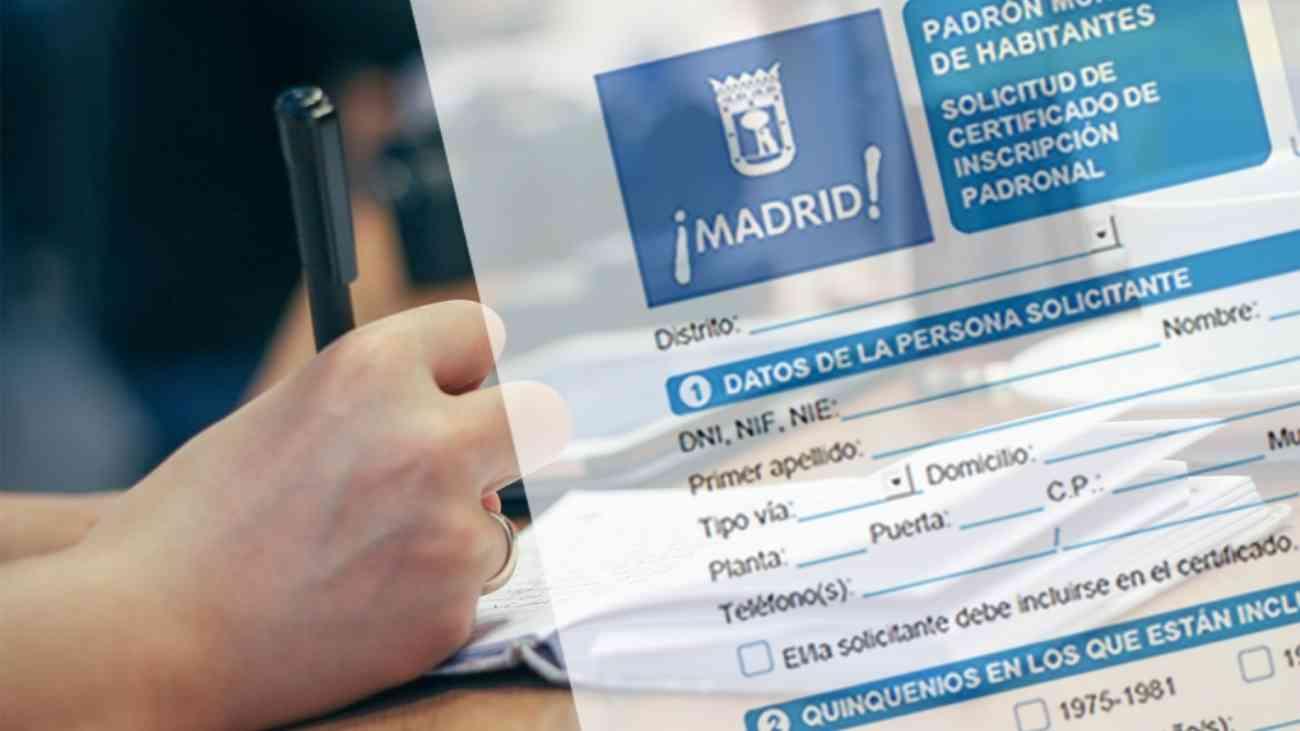
The form is the hoja padronal, in capitals, signed by hand by every adult. There's also the declaración responsable, for when people who no longer live in your flat are still registered: common in rentals, and it starts a removal file for them, not you.
Yes. Everyone wants the empadronamiento Madrid online version that solves it in one click, and it exists: with a certificado digital or Cl@ve you do the alta or the address change through the Ayuntamiento's electronic office. If it needs someone else's consent, they have five calendar days, or it's cancelled.
The uncomfortable truth: if you just arrived you don't have that certificate yet, and getting one is its own little trámite, so for a newcomer it's faster to go in person. Once set up, doing your padrón Madrid online in your pyjamas is a small miracle.
Here's the expectation I want to correct, because it ruins people's planning: registering isn't instant. You hand in your documents, the Ayuntamiento checks them and resolves, and the legal maximum is three months. Most cases are faster, but "faster" isn't "today": if you need it next week, plan for it.
The document that proves it is the certificado de empadronamiento, the one that "acredita fehacientemente la residencia y el domicilio habitual". It's free, and only the Ayuntamiento de Madrid issues it: in person at the OACs with no appointment (except the auxiliary offices in Aravaca, El Pardo and Las Tablas, which don't do this one), online with electronic ID on the spot, or by phone, posted to your address. Register in person and that appointment can end with your certificado in hand.
I went through this with no help. At VA in Madrid we make sure that doesn't happen to you: we check your documents before the appointment and find you the earliest slot.
Message us on WhatsApp or book your empadronamiento support online.
Nothing. Registering is free and so is the certificado. Be wary of anyone charging "taxes" for the padrón. Paying someone to manage it is another thing: a service, and it's ours.
Yes. With the signed authorisation of whoever holds the home, their ID and their property document. The usual route if you rent a room or live with family.
Yes. The padrón is open to everyone who lives in Madrid, whatever your status.
In person, no: the OACs work with cita previa. Online it disappears, if you have a certificado digital or Cl@ve.
If your address changed, Police may request recent empadronamiento for a TIE renewal or duplicate. Check your case in our fingerprint appointment guide.
You now know how to get your padrón in Madrid: book the OAC appointment, bring a contract that survives the review, sign the declaración responsable if your flat has ghosts from previous tenants, ask for your certificado. The real question is whether your paperwork will pass on the first try, or whether you'll collect rejections the way we did.
The day we finally registered, the clerk said: "Officially, welcome to Madrid." If you'd rather skip straight to that sentence, write to us on WhatsApp or book directly in our agenda. We'll take care of the paperwork.
Welcome to Madrid. Officially.